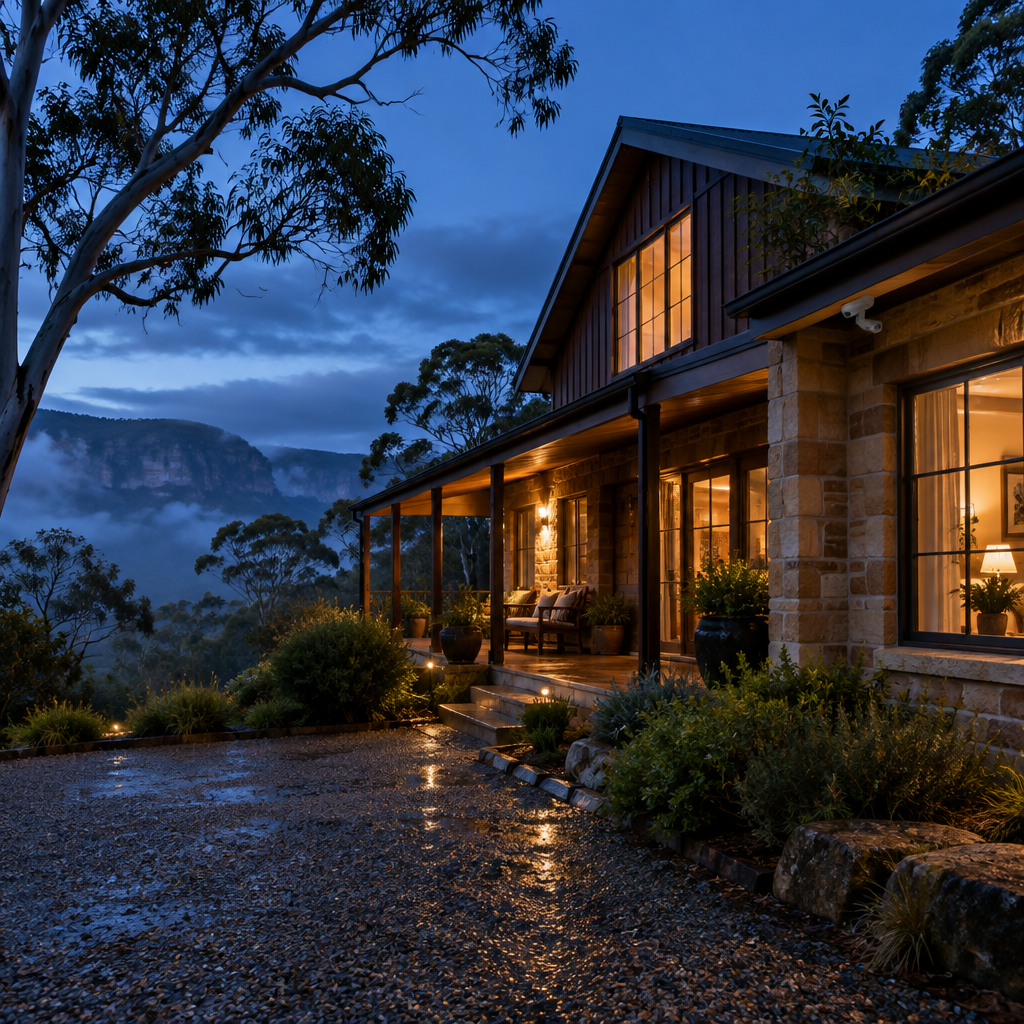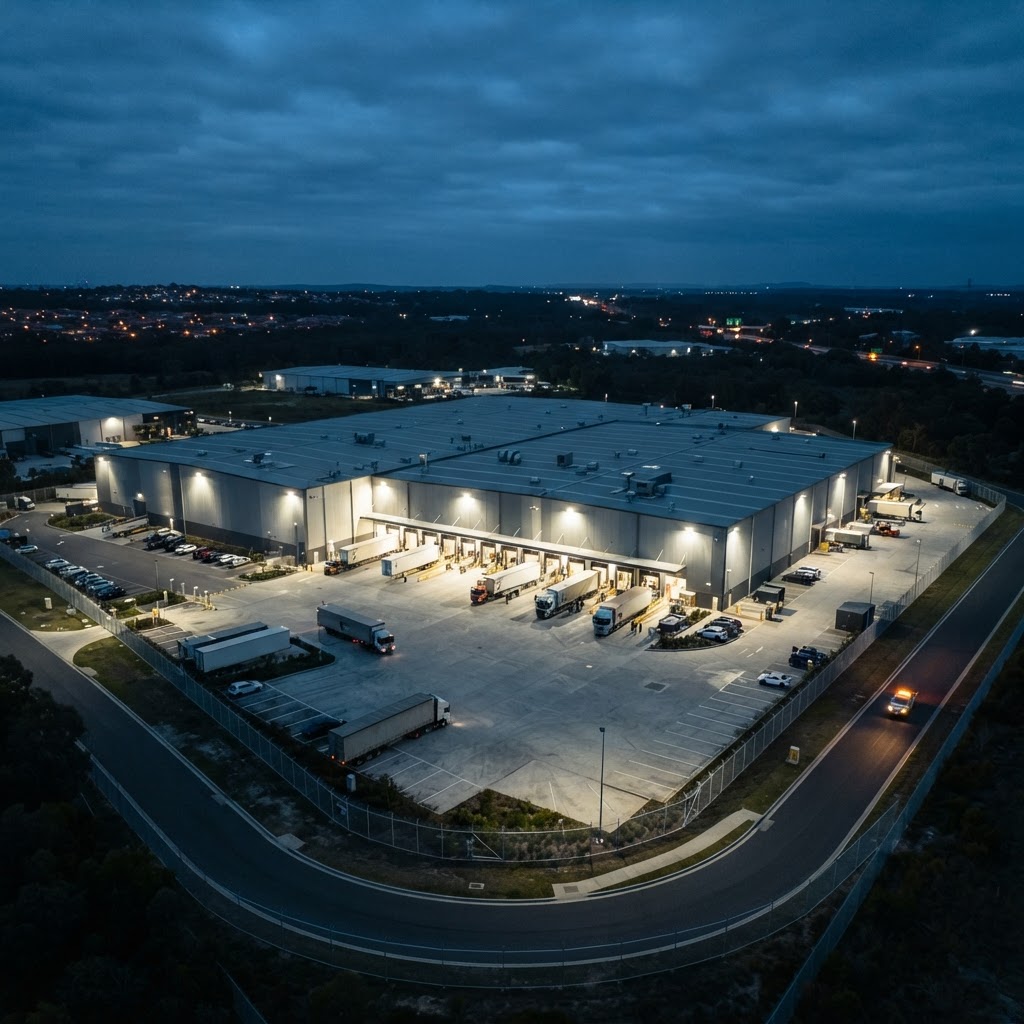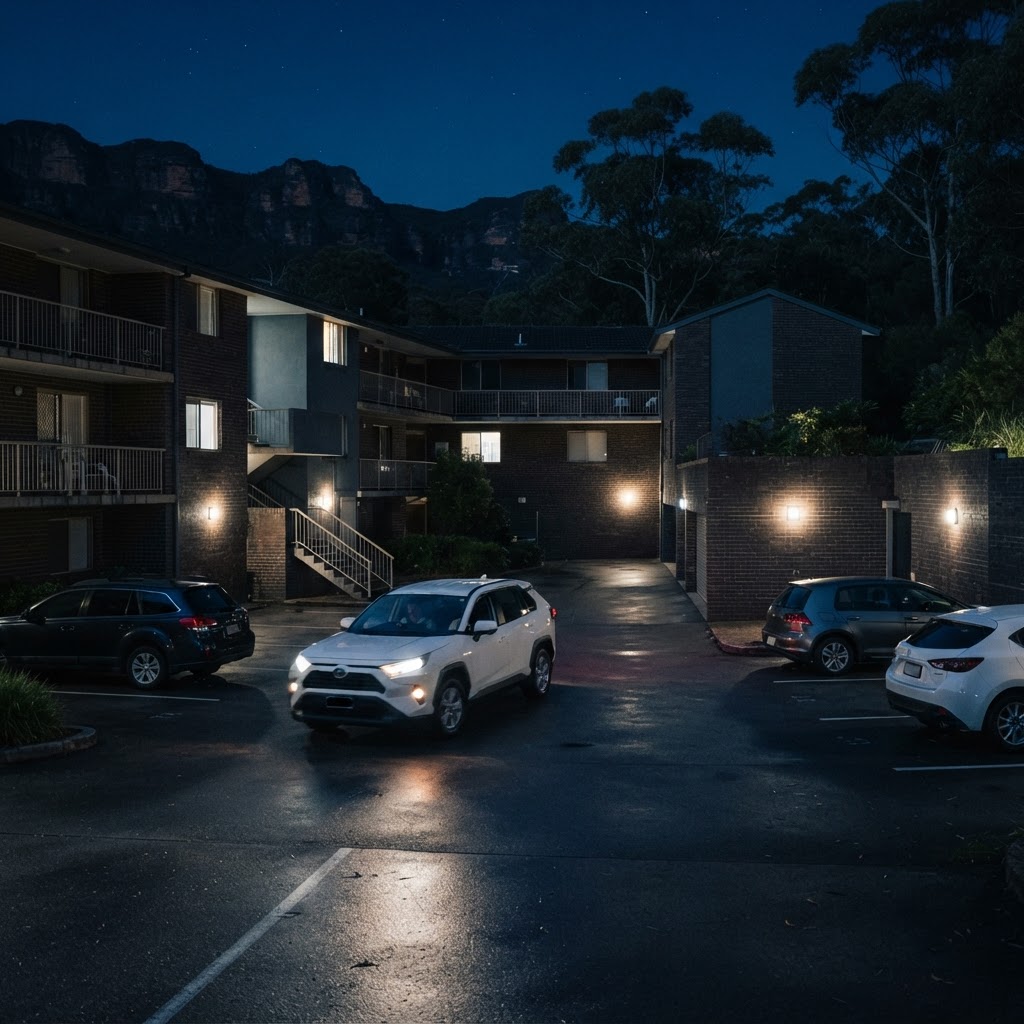
Strata committees, building managers and owners corporations across the Blue Mountains and Western Sydney share a security problem that a single lock can't solve. Common property — car parks, foyers, stairwells, storage cages, mail rooms and garbage bays — belongs to everyone and no one at once, which is precisely what makes it attractive to opportunistic offenders. Nobody is responsible for it at 2am.
That's the gap randomised mobile patrols are built to fill. A licensed patrol officer checking locks, doors, garages and grounds on an unpredictable schedule gives shared properties something no amount of resident vigilance can: a verified, documented presence during the exact hours risk concentrates.
Why Shared Property Gets Targeted
Offenders like common property for three reasons. Access is easy: one compromised garage door or fire-exit propped open at dinner time exposes every apartment above it. Presence is zero: a house that gets broken into has an owner behind the door; a storage cage doesn't. And accountability is blurred: when the mail room gets stripped, nobody is quite sure whose problem it is.
The predictable result is the pattern every strata committee knows — repeated break-ins to cars and cages, people sleeping in or loitering around stairwells and basements, damage to foyers and intercoms, and bins and skips attracting problems after hours. Once a building develops a reputation for being easy, the attention repeats.
What a Patrol Actually Does on a Strata Site
A well-built strata patrol is more than a drive-by. On each visit the officer should be checking and reporting on:
- Perimeter and access points — garage doors, roller doors, fire exits, gates and pedestrian entries: closed, locked and undamaged, or logged if not
- Car parks and driveways — vehicles present vs expected, signs of tampering, broken glass, garage remotes and boom-gate behaviour
- Common interiors — foyers, stairwells, lifts, mail rooms, bin bays and bicycle/storage cages, including suspicious accumulation of property that indicates someone is living in or using the space
- Lighting and condition — blown globes on approaches and in stairwills are one of the most commonly reported findings, and one of the cheapest fixes a committee can action from patrol reports
- People on site — a licensed officer can request people loitering in common areas to move on, and documents anything that needs escalating
Every visit should be GPS-verified and followed by a written report. That paper trail matters for strata more than most property types: it gives committees evidence for insurers, for police incident reports, and for general meeting motions on spending. "Patrol reports show three attempted entries at the Springwood street garage in October" wins an argument that anecdote never does.
Why Randomised Beats Scheduled
A patrol that arrives at 9:15pm every night is a schedule, and schedules get watched. Randomised patrols — a set number of visits per week at unpredictable times — mean nobody can wait the patrol out. For a Katoomba or Leura building where the after-hours quiet is the main protection, unpredictability is the product. It also happens to cost the same as a fixed round, because the officer is in the area regardless.
Blue Mountains and Western Sydney Context
Buildings in the Blue Mountains — Katoomba, Leura, Wentworth Falls, Springwood — face longer police and emergency response times than the Sydney corridor, so prevention and early verification carry more weight. Visitor parking that sits empty overnight, access points that back onto bushland, and holiday letting that churns keys and codes through dozens of temporary residents all raise the baseline risk. In Western Sydney's higher-density corridors around Penrith, the pattern tilts toward car park and storage theft, and higher resident turnover. The right patrol program reflects which pattern your building actually has. A site risk assessment maps that before a committee spends a dollar.
How Patrols Fit the Rest of the Plan
Patrols are most effective as part of a layered plan, not alone:
- Access control — working gates, re-coded fobs after tenant turnover, and remotes that are deactivated when reported lost
- CCTV covering entries and car parks — so every patrol-logged incident has footage behind it
- Lighting — kept on top of using the patrol reports themselves
- Resident reporting — a simple channel for residents to flag broken doors or loitering, feeding straight into what patrols prioritise
- Short-term guarding when needed — after an incident or during a works period, licensed guards provide visible presence until the building stabilises
What It Costs a Committee
Because one patrol officer covers multiple buildings per shift, a randomised program shared across the owners corporation typically costs each building a modest monthly amount — a small fraction of the cost of a single uninsured vehicle break-in, and a very easy line item to justify against common property insurance excesses. Committees usually start with several visits per week and adjust the frequency with the evidence the reports generate, which is the practical benefit of the reporting trail.
Frequently Asked Questions
How often should a strata building be patrolled?
Most committees start with several randomised visits per week and tune from there. Buildings with recent incidents, high visitor turnover or isolated car parks run more; quiet, well-lit buildings often run less. Let the incident and patrol data decide.
Can a patrol officer remove someone from common property?
A licensed officer can direct people loitering in common areas to leave and can document and escalate anything beyond that. Patrol reports give committees the evidence trail to involve police or seek trespass action for repeat offenders.
Do patrols help with insurance?
Documented, verified patrols and their incident reports strengthen insurance claims and demonstrate risk management. Committee members should ask their insurer directly which measures affect their policy.
Should we add CCTV as well?
They work best together: patrols provide presence and verification; CCTV provides evidence and coverage between visits. If budget forces a choice, start with patrols and lighting, then add cameras over entries and car parks as the reports justify.
Put Verified Presence Behind Your Common Property
Shared property doesn't have to be the softest part of the building. A randomised, GPS-verified patrol program gives committees documentation, deterrence and fast escalation — without the cost of a full-time guard. Talk to Statewide Protective Services about a strata patrol program for your Blue Mountains or Western Sydney building.