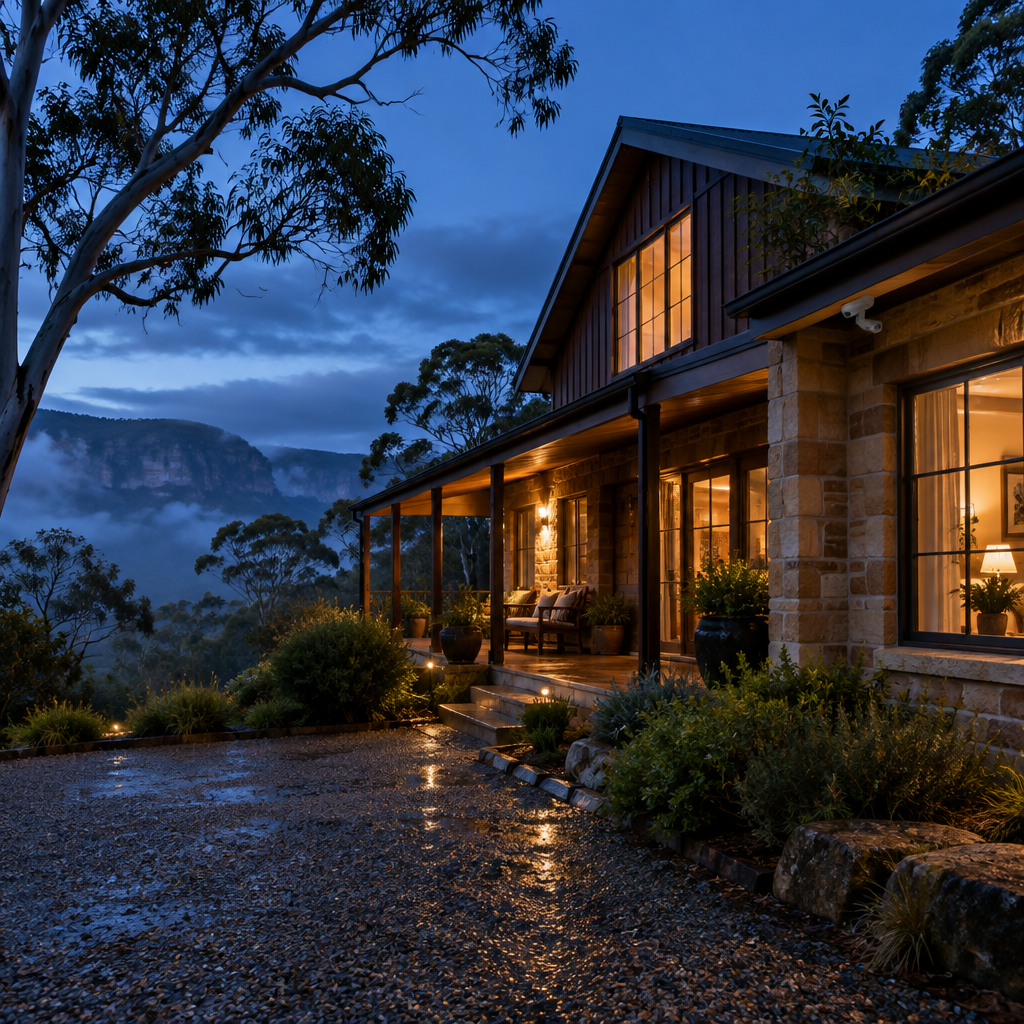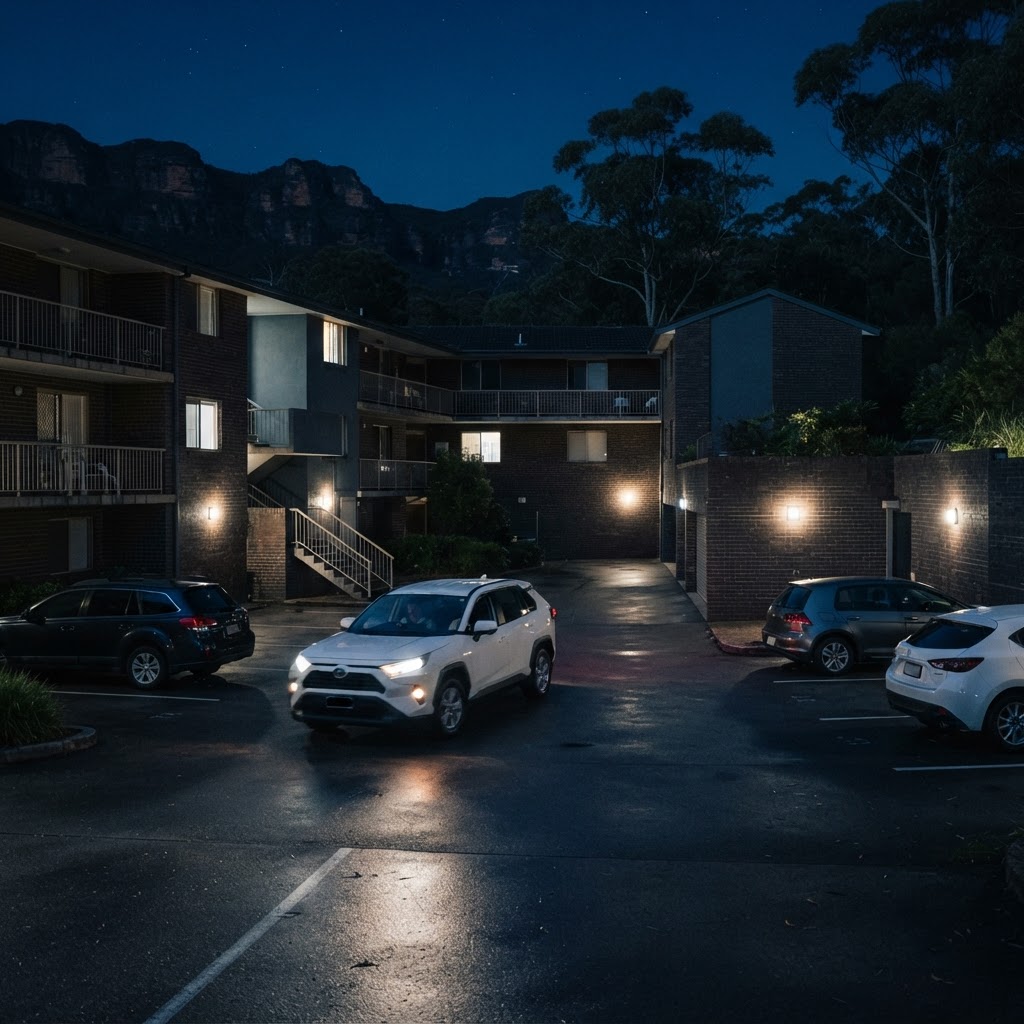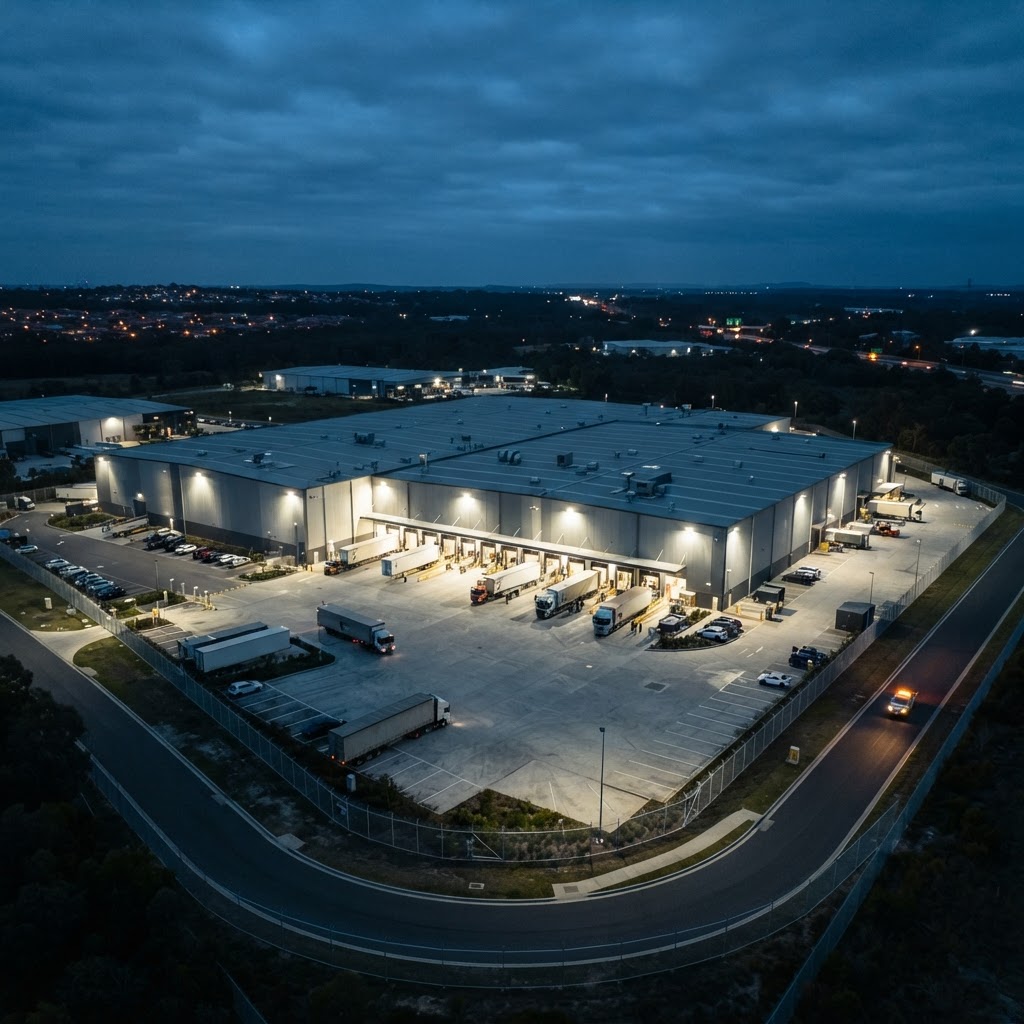
Between the M4 corridor and the base of the Blue Mountains sits some of the highest-value property in Western Sydney: warehouses, distribution centres, trades depots and industrial sites packed with stock, plant and vehicles that cannot be taken home at night. When the last truck leaves and the roller doors come down, these sites carry some of the most concentrated after-hours risk of any commercial property.
The good news is that industrial security is a solved problem. Sites that layer the right measures in the right order see dramatically fewer incidents, faster response when something does happen, and cleaner insurance outcomes. Here is how to build that layers, in the order that actually works.
Layer 1: The Perimeter
Before anyone reaches your building, the site boundary should do its fair share of the work:
- Fencing and gates in good repair, with no gaps behind bins, pallet stacks or neighbouring lots that double as ladders and step-ups
- Lighting covering the approach routes offenders actually use: rear lanes, delivery areas and blind corners, preferably motion-activated
- Signage that says the site is monitored and patrolled, in visible locations at the boundary and every entry point
- CCTV on the perimeter line, so approaches and vehicle movements are recorded before anyone touches the building. A professional CCTV monitoring arrangement adds live control room verification to the same cameras.
Layer 2: The Building Envelope
Industrial buildings have more ways in than any other property type, and each needs its own answer:
- Roller doors are the classic industrial weak point. Solid padlocks or commercial locking bars, plus monitored door contacts, so a forced door raises an alarm rather than a slow discovery.
- Rear fire exits must open for safety, but should be fitted with alarmed crash bars so they cannot double as quiet entry points.
- Skylights and roof access are the route most owners never check. A sensor or camera covering internal roof access is cheap insurance.
- Loading docks should be cleared of portable stock, pallet jacks and anything that helps move goods quickly.
Layer 3: Monitored Alarms and Verified Response
A siren on an industrial estate after hours is noise nobody hears. Back-to-base alarm monitoring puts a licensed control room on every activation, with a documented response plan: keyholder notification, patrol dispatch and police escalation where there is evidence of entry. When sensors are paired with cameras so the control room can verify what tripped them, false callouts fall and genuine incidents get a faster, more confident response.
Layer 4: Human Presence
Electronics detect and deter, but presence prevents. For most Western Sydney industrial sites the practical options are:
- Randomised mobile patrols: a licensed officer checking locks, doors and yards on an unpredictable schedule, with GPS-verified attendance and a written report after every visit
- Lock-up and unlock services for sites with late finishes or early starts
- Short-term static guarding during stocktakes, peak season or after an incident, when a visible presence is worth more than any camera
Layer 5: People and Procedures
The final layer is routine. Key and access-code control with an audit trail, opening and closing checklists, staff training on what to report, and a documented after-hours response plan that says who gets called, in what order, by whom. Sites that write this down respond in minutes; sites that improvise respond in days.
Western Sydney's Industrial Risk Profile
Industrial estates around Penrith, St Marys, Mt Druitt, Eastern Creek and the broader Western Sydney corridor have seen steady growth in warehousing and logistics, and steady attention from organised theft targeting plant, tools and loads. Sites near the base of the Blue Mountains face the added factor of longer response times once you leave the corridor, which makes prevention and verified monitoring worth proportionally more. A professional risk assessment maps which of these factors actually apply to your site, rather than selling every business the same package.
Frequently Asked Questions
What is the single best security measure for a warehouse?
No single measure wins: layered security works because each layer covers the failure mode of the next. If forced to prioritise, most sites get the largest risk reduction from monitored alarms with verified response, plus randomised patrols for genuine presence.
Are patrols expensive for a small depot?
Because a patrol officer covers multiple sites in an area, randomised patrol programs are far more affordable than most owners expect, typically a small fraction of the cost of a single uninsured loss.
Do I need security guards or just cameras?
Cameras and monitoring detect and verify; guards and patrols prevent. Most sites run monitoring plus patrols and add licensed security guards for peak periods, stocktakes or post-incident coverage.
How do I choose a security provider for an industrial site?
Ask for their Master Security Licence, verify it on the SLED public register, and ask specifically about industrial experience: dock and roller door security, GPS-verified patrols and written incident reporting. A provider who answers those three well is usually the right one.
Layer It Before You Need It
Warehouse and depot security is not about buying everything: it is about putting the right layers in the right order for your site. Start with the perimeter and the building envelope, add verified monitoring, and back it with patrols and procedures. If you want that mapped against your actual site, talk to Statewide Protective Services about a layered security plan for your Western Sydney or Blue Mountains site.