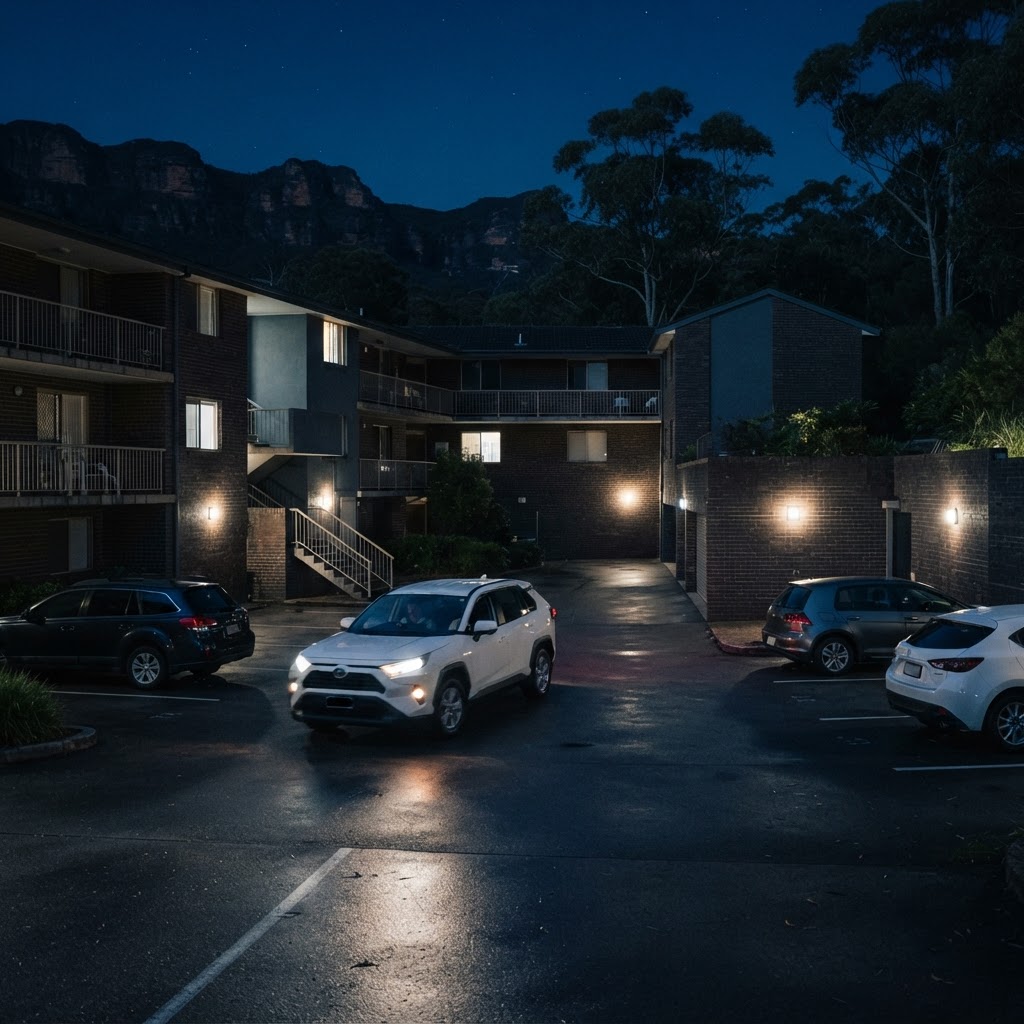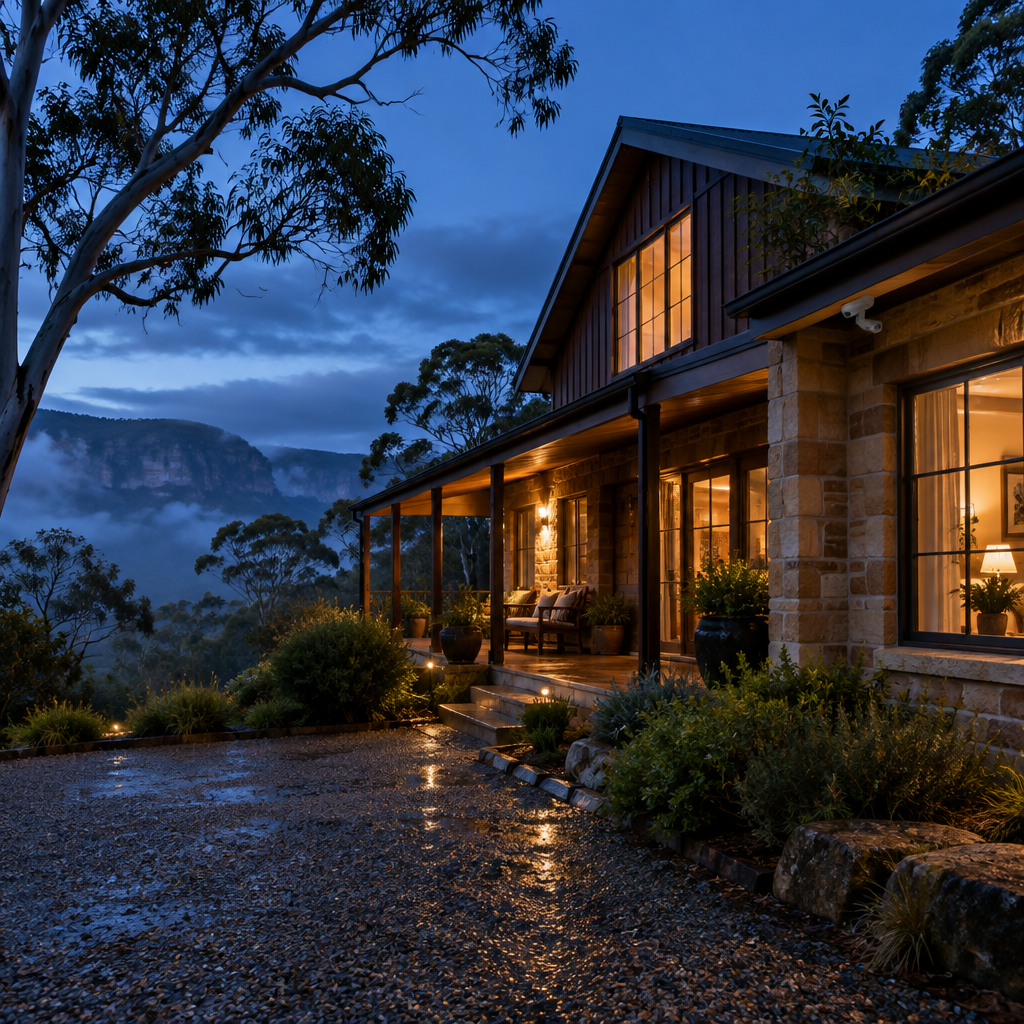
Tourism underpins the Blue Mountains economy. Guesthouses in Leura, boutique stays in Katoomba, holiday cottages around Wentworth Falls and Blackheath, and short-stay properties managed from as far away as Penrith all depend on visitors feeling safe. They also share a security problem most other businesses never face: the property is handed over to strangers, night after night, often with nobody on site.
Accommodation security is not office security. Guests come and go at all hours, keys change hands constantly, occupancy swings with the seasons, and many properties sit empty midweek or through the shoulder months. Here is how to protect an accommodation business without turning it into a fortress.
Why Accommodation Carries Its Own Risk Profile
Three things make hospitality properties different. Keys are everywhere: lockboxes, code pads and booking-platform messaging mean dozens of people hold, or have held, access in any given month. Occupancy is uneven, so a full house in autumn and a vacant house in July are different security situations, and the second is when most losses happen. And properties are often isolated, so a cottage down a dark driveway in Wentworth Falls has no neighbouring business to notice a car that does not belong.
The Incidents Operators Actually Deal With
Most incidents are not dramatic. They are repetitive and preventable:
- Vandalism and trespass during vacant periods, especially at unlit properties with closed signs
- Theft of outdoor equipment, bikes, tools and split-system units, rarely recovered
- Unauthorised entry through a lockbox code shared too widely, or a window left unlocked by a departing guest
- Noise and conduct disputes after midnight, with staff off site until the cleaner arrives
- Insurance conditions requiring evidence of reasonable security at unattended buildings
Each has a low-cost answer, but it must work when nobody is there to apply it.
Start With Arrival and Key Control
Access is the front door of your program and usually the weakest part.
- Position lockboxes out of sight from the street, and change codes between bookings
- Keep a written key register covering cleaners, gardeners, trades and managers
- Re-key or re-code when a key is lost or a contractor leaves. It costs far less than a theft claim
- Use unique guest codes rather than one shared code, so you can tell who accessed the property
Make the Property Look Occupied and Look After Itself
Offenders choose easy targets. A property that looks occupied, lit and observed gets skipped.
- Lighting: motion-activated lights over driveways, rear entries and storage areas. Dark driveways in Leura and Wentworth Falls are an invitation after 9pm
- Signage: a small professional sign noting the property is monitored and patrolled changes behaviour more than most owners expect
- Timers: interior lamps on timer through vacant periods, so the place never looks abandoned
- Routine checks: a midweek walkthrough in low season to catch forced windows, storm damage or mail piling up
Use CCTV Without Creating a Privacy Problem
Cameras matter twice here: once for security, once for guest privacy rules.
- Cover entrances, driveways, car parks and shared outdoor areas. Never cover inside a guest room, bathroom or any space where privacy is reasonably expected
- Sign at the entry so guests know before they arrive
- Choose monitored CCTV over record-only systems: recording gives footage after a loss, monitoring gives a response during one
- Retain footage for a defined period, restrict access, and nominate one person to handle enquiries
For placement detail, see our guide to CCTV camera placement.
Cover Vacant Periods With Patrols
The greatest exposure is the empty property: midweek gaps, shoulder season, the weeks after Christmas and the owner's own holidays. This is what mobile patrols are built for.
A randomised patrol arrives at unpredictable times, checks doors, windows, gates and the perimeter, looks for damage or attempted entry, and leaves a written report. Across Katoomba, Springwood, Leura and Wentworth Falls, one local run covers multiple properties, which keeps the cost modest for a single guesthouse. To see what a visit includes, read what a mobile security patrol checks. Properties hosting functions or weddings should plan separately for those days with our event security planning checklist.
Protect Staff and Manage the After-Hours Gap
Cleaners alone at 6am, a duty manager closing at midnight, a gardener on a quiet Tuesday: staff safety is part of accommodation security.
- Two-person routines for opening and closing where practical, and a check-in message when a lone worker finishes
- Lit pathways and car parks so nobody walks to their car in the dark
- A clear rule that staff never confront intruders. They observe, withdraw and call
- A documented after-hours contact list: who is called first, at what threshold, and who speaks to guests
In peak periods or during refurbishments, some properties bring in licensed security guards for a visible presence at the door. Most guesthouses do not need that year round, but it earns its cost on event weekends.
Check Licensing Before You Appoint Anyone
Anyone providing guarding, patrol or monitoring services in NSW must hold a Master Security Licence under the Security Industry Act 1997, and every officer must hold an operative licence. Licences are administered by SLED within NSW Police and the register is public.
Before appointing a provider, ask for the Master licence number, verify it on the SLED register, and check it is current and covers the work you need. Confirm public liability cover with a certificate of currency. A provider who hesitates on either question is telling you something useful. Local base matters too: a firm that knows the roads between Katoomba and Lithgow responds faster than one dispatching from Sydney.
Build It Around Your Season, Not a Template
The right mix depends on the property. A four-room guesthouse in Leura differs from a 30-unit complex in Katoomba or a holiday let managed from Penrith. A security risk assessment walks the property, reviews access and vacancy patterns, and produces a prioritised plan you can implement over a season. Our commercial security services page covers the full range, and the Katoomba service area outlines local coverage.
Frequently Asked Questions
Can I use CCTV in a holiday rental?
Yes, for entrances, driveways and shared outdoor areas, provided guests are informed with clear signage and cameras never cover private spaces. Keep footage secure and retain it only as long as needed.
How often should a vacant property be patrolled?
Most guesthouses do well with a few randomised visits per week in low season, and nightly checks during longer vacancies or after an incident. Timing matters more than frequency, because predictable visits are easy to work around.
Do I need a licensed security provider in the Blue Mountains?
Yes. Guarding, patrol and monitoring must be delivered by a Master-licensed business using individually licensed officers. Verify the number on the SLED public register before appointing anyone, and confirm the licence class covers the services you are buying.
Plan Before the Quiet Season
Accommodation security is best planned in autumn, not discovered in winter. Review access and key control, fix the lighting, place cameras correctly, and put patrol cover over the empty weeks. If you run a guesthouse, holiday let or tourism business anywhere from Lithgow to Penrith, talk to Statewide Protective Services about a plan built around your season.