Twice a year, school holidays empty out offices across the Blue Mountains and Western Sydney. Then Christmas stacks another shutdown on top, and construction sites, workshops and retail strips from Katoomba to Penrith go quiet for days or weeks at a stretch. It's a rhythm every local business owner knows — and it's also the rhythm that creates the year's highest-risk windows for unattended premises.
The good news: shutdown periods don't require a security overhaul. They require a handful of deliberate steps, timed to the calendar, that remove the easy opportunities most offences depend on.
Why Shutdown Periods Are Higher-Risk
For businesses that close or slow down during school holidays and the Christmas break, three things change at once:
- Presence disappears. An office in Springwood that normally has people coming and going all day becomes a silent building for fourteen days. Busy streets that self-police become empty ones.
- Formal and informal watchfulness drop. In tourist towns like Katoomba and Leura, school holidays bring more visitors — but the regulars who'd notice something off around a business aren't on their usual schedule.
- Opportunity concentrates. Tools left on site, vehicles parked up, stock sitting in an unattended shop — everything an opportunistic offender wants, with no one returning for days to discover it.
Construction and trade sites feel this hardest. A site that shuts down mid-build carries materials, plant and equipment that can't easily be taken home, often with perimeter fencing as the only barrier.
The Pre-Shutdown Checklist
Before the last person locks the gate:
- Photograph and list what stays behind. Tools, plant, stock and vehicles — with serial numbers where they exist. If a loss happens, this is what your insurer pays on.
- Remove what you can. Small high-value items — laptops, tablets, power tools, cash trays — leave the site. An open, visibly empty till discourages smash-and-grab.
- Harden every entry point. Roller doors, rear exits, skylights, and the side gate. Most unlawful entries are through points nobody used, checked or maintained.
- Test the alarm with your monitoring provider. Do this a week before shutdown, so a faulty sensor or flat backup battery can be fixed while trades are still working.
- Tidy the perimeter. Pallets, bins and crates stacked against a wall become steps and ladders. Store them away from the building or inside the fence line.
- Light the entry points. Motion-activated lighting over doors and loading areas removes the anonymity that most after-hours offences rely on.
Coverage While the Site Is Quiet
Random mobile patrols
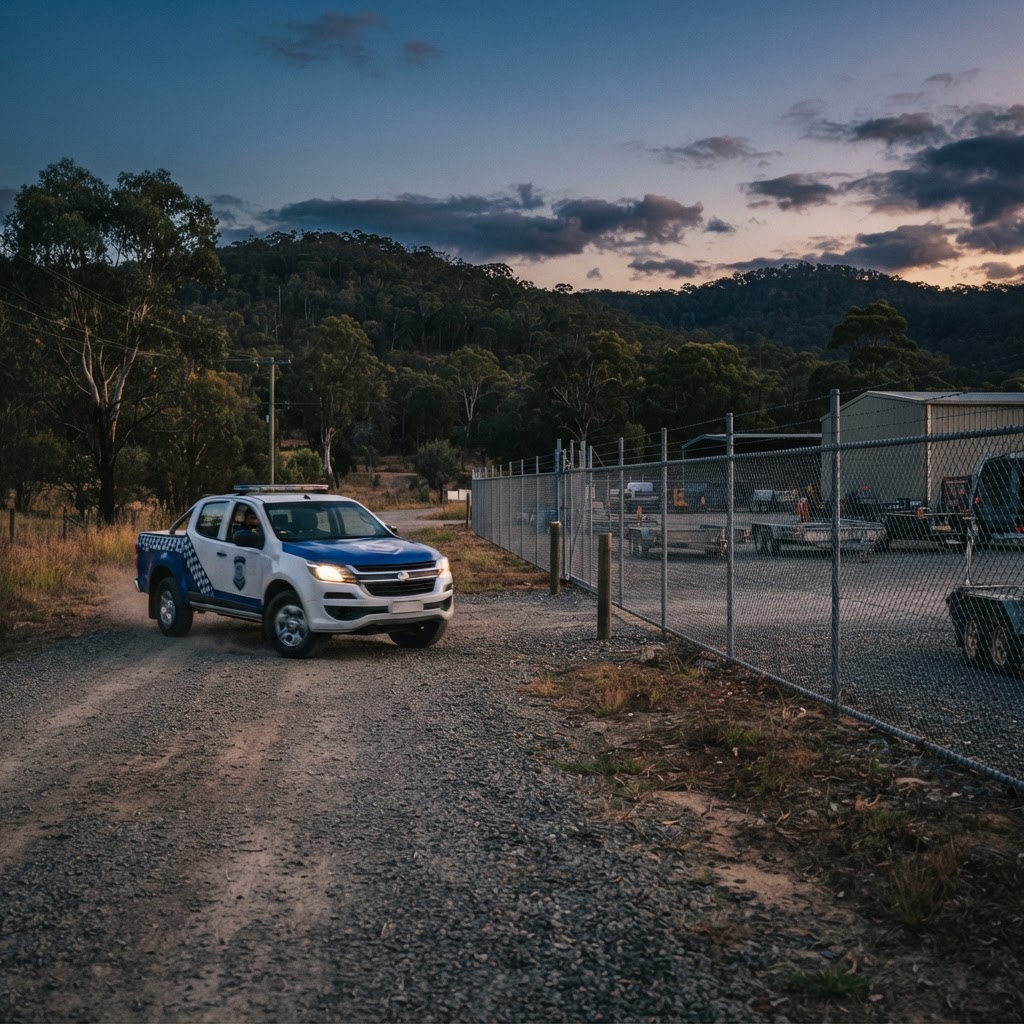
A licensed patrol visiting your site on a randomised schedule delivers the one thing an empty building can't provide for itself: presence. Random timing matters — a fixed 9pm round is easy to plan around, while unpredictable visits mean an intruder can never know the site is unwatched. Every visit should be GPS-verified and documented in a written report, which is also exactly the evidence trail an insurer likes to see. For businesses across the Mountains, mobile patrols are the most cost-effective shutdown coverage available.
Alarm monitoring and CCTV verification
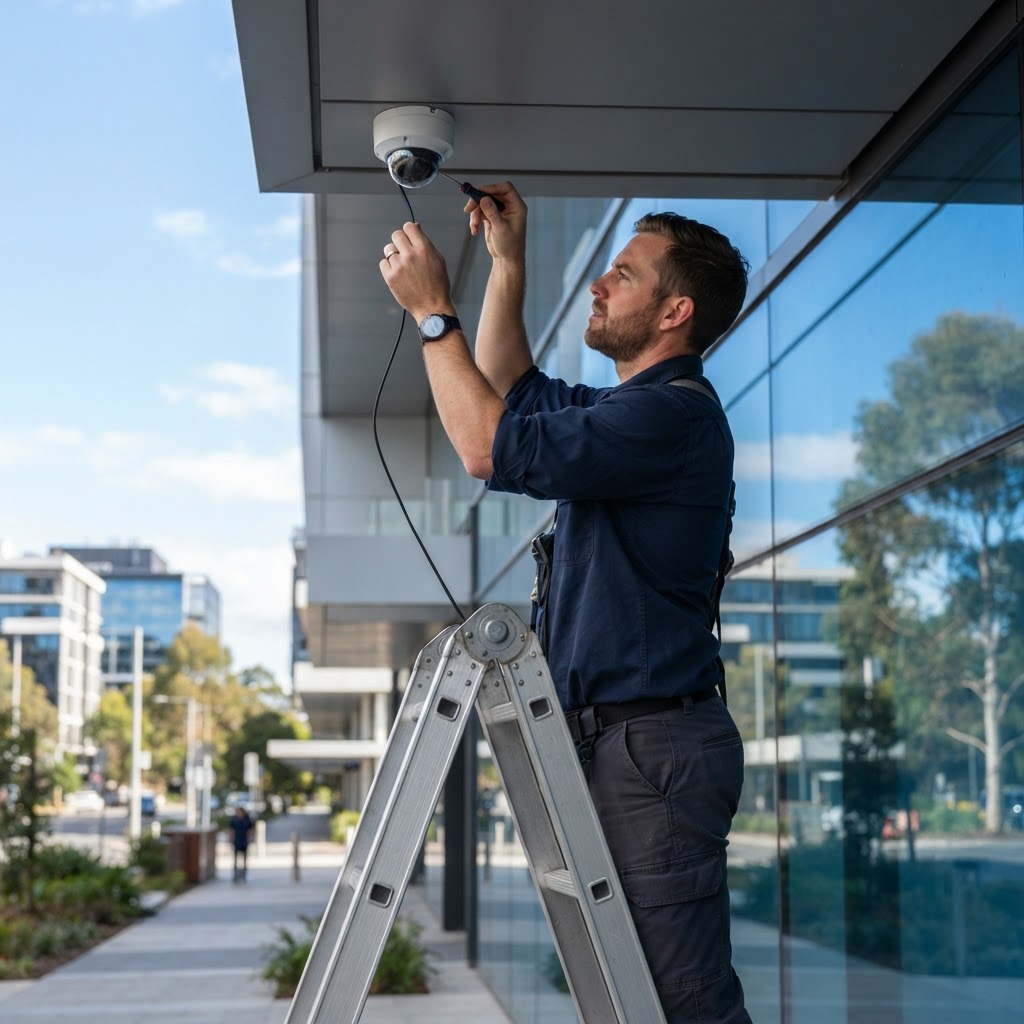
An unmonitored alarm on a closed site is just noise in an empty street. Back-to-base monitoring puts a control room on every activation, and when it's paired with CCTV monitoring, operators can visually verify what's happening before dispatching a response — faster when it's genuine, cheaper when it's a loose banner or a spider across a lens.
Construction and industrial sites
For shutdown-period construction sites, a layered approach is standard: secure perimeter fencing checked for gaps, plant and materials stored out of view where possible, monitored alarms on containers and offices, and patrols at unpredictable intervals. The cost of that package is a rounding error against a single stolen excavator attachment or copper pull.
The Other Side of School Holidays: Busier, Not Quieter
Not every business slows down. Cinemas, shopping centres, cafes and tourist-focused retailers across Katoomba, Leura and Penrith see their busiest trading during school holidays — and a different risk profile: crowds, cash handling, theft and customer incidents. If anything, the right question for a holiday-trading business is whether licensed security guards should be on the roster for peak days. Many local businesses build a small guard presence into their holiday trading plan and drop it when the holiday crowd goes home.
Licensing: The Easy Two-Minute Check
Any patrol, guard or monitoring service working your site must be licensed under the Security Industry Act 1997 (NSW), administered by SLED, and the provider must hold a Master Security Licence. Ask for licence details and take a minute to verify them on the SLED public register. A provider who can't produce them cleanly isn't one to leave looking after your livelihood.
Frequently Asked Questions
How often should a closed site be patrolled during holidays?
It depends on risk — a Springwood storefront and a Wentworth Falls construction site aren't the same job. Randomised visits nightly or several times a week is the common shutdown pattern, with extra coverage around Christmas, Boxing Day and New Year's Eve.
Is it better to leave lights on or use motion sensors?
Motion-activated lighting is generally more effective. Constant lights just confirm the building is empty; motion lighting creates surprise and visibility exactly when someone approaches.
What should I do if the alarm activates while the business is closed?
That's what the response plan is for — documented before shutdown with your monitoring provider: verification of the activation, patrol dispatch where the plan calls for it, keyholder notification and police escalation where there's evidence of an offence.
Do I need security during school holidays if my business stays open?
If you trade through the holidays, your risk is front-of-house: crowds, cash and theft. A small guard presence on peak days, plus your usual alarm and CCTV arrangements, covers most of it.
Plan the Quiet Periods Like the Busy Ones
Shutdown periods are when your preparation does the work you can't. A checklist walked before lock-up, a monitored alarm, and verified patrols while the site is empty turn the highest-risk weeks of the year into the quiet ones. If your Blue Mountains or Western Sydney business has a shutdown coming up, a commercial security review is the natural place to start.